Serve as a guide
It sets the timeline for implementing the measures that reduce risk.
Governance & Strategic Planning
We define and prioritize the security projects that bring your organization's risks down to acceptable levels.
What is a Security Master Plan?
A Security Master Plan (SMP) defines and prioritizes a set of information security projects to reduce the organization's risks to acceptable levels, based on an analysis of the starting point.
It's built after a risk analysis, to understand where you start and set where you want to go.
A good SMP aligns with the company's strategic objectives, defines its scope and incorporates the obligations and best practices that employees and third parties must follow.
Objectives
It sets the timeline for implementing the measures that reduce risk.
It detects which areas are most exposed to attacks, leaks or unforeseen events.
It shows which risks your information assets are exposed to, with their likelihood and consequences.
It creates and implements the security measures needed to prevent risks.
Phases
Phase 3 in detail
They improve current ways of working so they cover the controls of the regulatory framework.
They address the missing or insufficient technical and physical controls we detect.
They define the strategy for managing risks that exceed your acceptable risk level.
Benefits
You know which areas are most exposed to attacks, leaks or unforeseen events.
You have internal rules that govern the company's security.
You know the risks your systems are exposed to.
You have contingency plans and measures ready.
FAQ
A roadmap that defines and prioritizes the security projects needed to bring the organization's risks to an acceptable level, aligned with its business objectives.
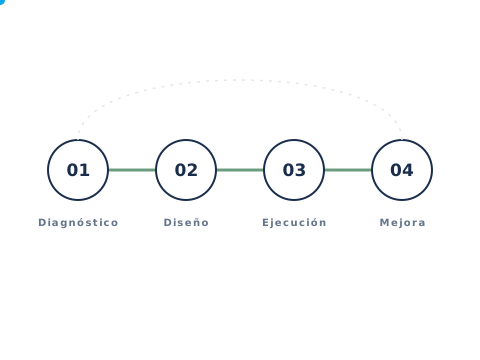
In six phases: understanding the current situation, defining objectives, analyzing risks, identifying initiatives and projects, prioritizing them and putting them into action.
We support you from the initial analysis to implementation.